How to Choose a Barrier Cream for Dry, Sensitive Skin
Barrier repair takes 4-8 weeks with the right formula. Learn what to check beyond ingredient names—certification scope, pH, and full formulation.
Contents
- What Makes a Barrier Cream Different from a Moisturizer
- The Complete Formulation Matters More Than One Hero Ingredient
- pH Balance: The Overlooked Barrier Repair Factor
- Understanding Organic Certification: What It Covers and What It Doesn't
- How to Match a Barrier Cream to Your Skin Type
- What to Check on the Label Before You Buy
- How Long Does Barrier Repair Take?
- Building a Simple Barrier-Supportive Routine
- Barrier Creams That Prioritize Transparency
- FAQ
- What's the difference between a barrier cream and a regular moisturizer?
- Can I use a barrier cream if I have oily or acne-prone skin?
- How do I know if a product's organic certification is legitimate?
- Does "organic" mean the barrier cream will work better for sensitive skin?
- How long should I use a barrier cream before I see results?
- Can I layer a barrier cream with other skincare products?
- What pH should a barrier cream have?
Your skin feels tight after cleansing. Redness flares when you try a new product. Dryness returns no matter how much moisturizer you apply. These are signs of a compromised skin barrier—and a barrier cream can help repair it.
But not all barrier creams work the same way. According to the American Academy of Dermatology, a damaged barrier allows moisture to escape rapidly, creating microscopic gaps that make skin highly vulnerable to inflammation. To fix this, you need more than a moisturizer—you need a formula designed to rebuild the barrier's lipid structure.
This guide walks you through what to check before you buy: the complete formulation, certification scope, pH balance, and how to match a barrier cream to your skin's actual needs.
What Makes a Barrier Cream Different from a Moisturizer
A moisturizer adds hydration. A barrier cream rebuilds the skin's protective structure.
Board-certified dermatologist Dr. Stacy Chimento explains that repairing the skin barrier means replenishing the essential lipids and increasing water hydration. The skin barrier—also known as the stratum corneum—serves as your body's first line of defense against environmental stressors, irritants, and moisture loss.
When this barrier becomes compromised, sensitive skin becomes even more reactive, leading to increased redness, dryness, irritation, and vulnerability to external aggressors.
A true barrier repair cream contains three specific lipid components in a precise ratio: ceramides, cholesterol, and fatty acids. According to formulation research, this is often referred to as the 3:1:1 molar ratio—the same ratio found in healthy skin.
The Complete Formulation Matters More Than One Hero Ingredient
Many barrier creams highlight ceramides on the front label. But ceramides alone don't rebuild the barrier.
Research shows that ceramides are most effective when used with cholesterol and fatty acids to mimic the skin's lipid layer. Without all three components, the formula can hydrate without truly repairing.
Here's what to look for in a complete barrier repair formulation:
Ceramides — The structural lipids that bond skin cells together. Look for multiple types (Ceramide NP, AP, EOP) rather than a single ceramide.
Cholesterol — Completes the lipid profile. Note that vegetable oils contain phytosterols, not cholesterol—true barrier repair often benefits from ingredients that closely mimic cutaneous cholesterol.
Fatty Acids — Palmitic acid, stearic acid, and other fatty acids fill gaps in the barrier and support lipid balance.
Humectants — Glycerin, hyaluronic acid, and panthenol draw water into the skin and keep it there.
Occlusives — Ingredients like squalane or shea butter form a protective layer that slows water loss.
A well-designed barrier cream addresses several needs at once: it replenishes lipids, locks in hydration, soothes inflammation, and protects against further damage.
pH Balance: The Overlooked Barrier Repair Factor
Damaged skin has a higher pH than healthy skin. According to formulation experts, your cream must be acidic—around pH 5.0 to 5.5—to help enzymes repair the barrier.
Multiple sources confirm that pH-balanced formulations are not just about comfort—they actively support barrier function. A cream with the right ingredients but the wrong pH can slow down repair or even irritate compromised skin further.
When evaluating a barrier cream, check whether the brand discloses the pH. Formulas tuned to pH 5.5 respect the skin's acid mantle and create the optimal environment for barrier enzymes to function.
Understanding Organic Certification: What It Covers and What It Doesn't
You'll see "organic" on many barrier creams. But what does that certification actually mean?
COSMOS certification is the international standard for organic and natural cosmetics. It offers two signatures: COSMOS ORGANIC and COSMOS NATURAL.
COSMOS ORGANIC requires that 95% of plant-based ingredients and at least 20% of all ingredients (10% in rinse-off products) come from organic farming. According to COSMOS standards, water and minerals cannot be certified organic because they are not from agriculture—so a product with a high water content will show a lower organic percentage even if all plant ingredients are certified.
COSMOS NATURAL complies with COSMOS standards but does not meet the minimum organic percentages. It still prohibits parabens, phenoxyethanol, synthetic fragrances, and petrochemical ingredients.
Ecocert, one of the founding certification bodies behind COSMOS, verifies products from composition to processing and packaging. All products marketed with the Ecocert logo have been verified by their teams.
Here's what organic certification tells you—and what it doesn't:
What it covers: The sourcing and farming practices of specific plant ingredients. The absence of prohibited synthetic chemicals. Transparent labeling of organic percentages.
What it doesn't cover: The complete formulation's effectiveness for barrier repair. Whether the pH is optimized for sensitive skin. Whether the lipid ratio matches what your barrier needs.
A product can have certified organic ingredients and still lack the ceramide-cholesterol-fatty acid balance required for true barrier repair. Conversely, a well-formulated barrier cream may use some non-organic ingredients (like synthetic ceramides or cholesterol) that are more stable and effective for barrier function.
The key is to evaluate both: Does the brand explain which ingredients are certified and why? And does the full formula—organic or not—contain the lipid profile your barrier needs?
How to Match a Barrier Cream to Your Skin Type
Barrier creams come in different textures, and the right one depends on your skin type and how compromised your barrier is.
For dry, flaky, or severely compromised skin: Look for rich, occlusive formulas with a high lipid content. Dermatologist-tested options often include triple lipid complexes (ceramides, cholesterol, fatty acids) plus squalane or shea butter to lock in moisture. These creams feel more enveloping and are ideal for nighttime use or during extreme dryness.
For combination or oily skin with barrier damage: Choose lightweight barrier creams or emulsions that deliver ceramides and humectants without heaviness. Korean barrier creams often excel in this category—they provide meaningful hydration and barrier support through niacinamide, panthenol, and probiotics without any greasiness.
For sensitive, reactive, or post-procedure skin: Prioritize fragrance-free, hypoallergenic formulas with anti-inflammatory ingredients like centella asiatica (madecassoside) or panthenol. Clinical testing on diverse skin types ensures the formula won't trigger additional irritation.
For eczema-prone or atopic skin: Look for products with the National Eczema Association Seal of Acceptance. These formulas are specifically tested on compromised barriers and avoid common irritants.
What to Check on the Label Before You Buy
Here's a practical checklist for evaluating any barrier cream:
1. Full ingredient list — Does it include ceramides (plural, not just one type), cholesterol or a cholesterol analog, and fatty acids? Or does it only highlight one "hero" ingredient?
2. pH disclosure — Does the brand state the pH? Is it between 4.5 and 6?
3. Certification scope — If it claims "organic," does the label show the percentage of organic ingredients and which certification body verified it (COSMOS, Ecocert, etc.)? Does the brand explain what is certified and what isn't?
4. Fragrance and irritants — Is it fragrance-free? Does it avoid parabens, synthetic colorants, and other known irritants?
5. Texture and packaging — Is the texture appropriate for your skin type? Is it packaged in a pump or tube (more hygienic) rather than a jar?
6. Clinical backing — Does the brand provide any clinical data, dermatologist testing, or third-party validation?
A barrier cream that checks all these boxes is more likely to deliver real repair, not just temporary comfort.
How Long Does Barrier Repair Take?
Barrier repair takes consistent effort—typically 4 to 8 weeks before you see a meaningful reduction in reactivity. If your skin does not improve after a month of a basic barrier repair routine, consulting a dermatologist is recommended.
The timeline depends on the severity of the damage, your skin type, and whether you are continuously exposed to environmental irritants or stress. But once the barrier is restored, improvements are durable and compounding.
During the repair phase, avoid over-cleansing, harsh exfoliants, and strong active ingredients like retinoids or acids. Focus on gentle cleansing, barrier-supportive hydration, and protection.
Building a Simple Barrier-Supportive Routine
A barrier cream works best as part of a consistent, gentle routine. Here's a basic framework:
Morning:
- Gentle, pH-balanced cleanser (or just rinse with water if your skin is very dry)
- Hydrating toner or essence (optional, for extra hydration)
- Barrier cream
- Sunscreen
Evening:
- Gentle cleanser (oil-based or amino acid-based for sensitive skin)
- Hydrating toner or essence (optional)
- Barrier cream (you can layer a richer texture at night)
If you're using actives like retinol or vitamin C, introduce them slowly after your barrier is stable—and always follow with a barrier cream to buffer irritation.
Barrier Creams That Prioritize Transparency
Some brands go beyond listing ingredients—they explain the full formulation, disclose certification scope, and design each step of the routine to work together.
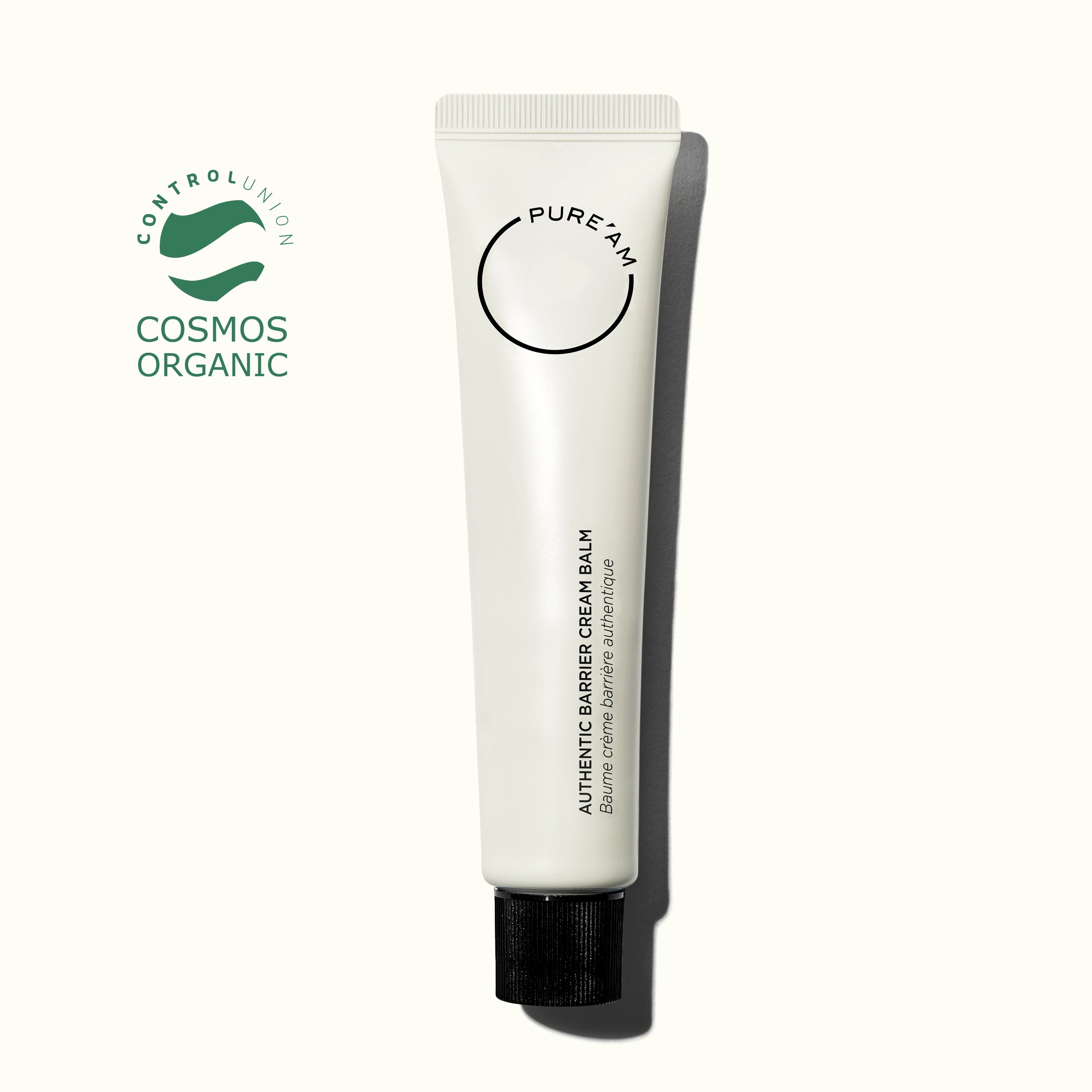
PURE'AM AUTHENTIC BARRIER CREAM BALM is formulated for dry, sensitive, easily irritated skin. It pairs organic-ingredient sourcing with thoughtful whole-formula design, combining ceramides, squalane, and a lipid-rich texture that supports the barrier without overwhelming it. The brand emphasizes transparency: not just which ingredients are certified organic, but how the complete formulation—pH, texture, and lipid balance—serves the barrier. It layers well under sunscreen and is designed to work alongside PURE'AM's gentle cleanser and toner for a simple, barrier-first routine.
Aestura Atobarrier 365 Cream is a Korean pharmacy favorite with patented ceramide capsule technology and a triple lipid complex (ceramides, fatty acids, cholesterol). It's accepted by the National Eczema Association, fragrance-free, and clinically tested for sensitive skin. With over 10 million units sold as of January 2026, it's a trusted option for compromised barriers.
CeraVe Moisturizing Cream is the benchmark drugstore option. Dermatologists widely recommend it for its ceramide-plus-MVE formula, 24-hour sustained hydration, and extraordinary price-to-performance ratio. It's fragrance-free, non-comedogenic, and suitable for face and body.
COSRX Ceramide Skin Barrier Moisturizer combines 7 ceramides, cholesterol, fatty acids, and 5 types of hyaluronic acid. Clinical trials report 96% barrier enhancement from the first use. It's lightweight, absorbs quickly, and works well under makeup.
La Roche-Posay Cicaplast Baume B5 focuses on soothing and repairing compromised barriers, especially after dermatological procedures. The formula centers on panthenol (vitamin B5) and madecassoside for anti-inflammatory benefits.
Each of these options addresses barrier repair, but they differ in texture, certification, and formulation philosophy. The right choice depends on your skin type, your priorities (organic sourcing vs. clinical testing vs. affordability), and whether you want a standalone cream or a full routine designed to work together.
FAQ
What's the difference between a barrier cream and a regular moisturizer?
A moisturizer adds hydration. A barrier cream rebuilds the skin's protective lipid structure with ceramides, cholesterol, and fatty acids in a ratio that mimics healthy skin. If your skin feels dry no matter how much moisturizer you use, you likely need barrier repair, not just hydration.
Can I use a barrier cream if I have oily or acne-prone skin?
Yes. Barrier damage can happen to any skin type, and a compromised barrier often triggers excess oil production as the skin tries to compensate. Look for lightweight, non-comedogenic barrier creams or emulsions that deliver ceramides and humectants without heaviness. Korean barrier creams often excel in this category.
How do I know if a product's organic certification is legitimate?
Check the label for the certification body (COSMOS, Ecocert, USDA Organic, etc.) and the percentage of organic ingredients. Legitimate certifications will show the certifier's logo and specify whether the product is "COSMOS ORGANIC" or "COSMOS NATURAL." You can also verify certified products on the certifier's website.
Does "organic" mean the barrier cream will work better for sensitive skin?
Not necessarily. Organic certification tells you about ingredient sourcing and the absence of certain synthetic chemicals—it doesn't guarantee the formula has the right lipid ratio, pH, or texture for barrier repair. A well-formulated barrier cream may use some non-organic ingredients (like synthetic ceramides) that are more stable and effective. Evaluate both the certification scope and the complete formulation.
How long should I use a barrier cream before I see results?
Barrier repair typically takes 4 to 8 weeks of consistent use. You may notice immediate comfort (less tightness, reduced redness), but structural repair—where your skin becomes less reactive and retains moisture better—takes longer. If you see no improvement after a month, consult a dermatologist.
Can I layer a barrier cream with other skincare products?
Yes. Barrier creams work well in a layered routine. Apply them after lighter hydrating products (toners, essences, serums) and before sunscreen in the morning. At night, you can layer a richer barrier cream as the final step. Avoid layering with strong actives (retinol, acids) until your barrier is stable.
What pH should a barrier cream have?
Look for a pH between 4.5 and 6, ideally around 5.5. This range matches the skin's natural acid mantle and supports the enzymes that repair the barrier. A cream with the right ingredients but the wrong pH can slow down repair or irritate compromised skin.
Ready to build a barrier-supportive routine? Start with a gentle cleanser, a well-formulated barrier cream, and sunscreen. Give your skin 4 to 8 weeks of consistent care, and watch your barrier—and your comfort—improve.
Explore PURE'AM's barrier-supportive routine designed for dry, sensitive skin—from gentle cleansing to barrier moisture care.
Frequently asked questions
What's the difference between a barrier cream and a regular moisturizer?
A moisturizer adds hydration. A barrier cream rebuilds the skin's protective lipid structure with ceramides, cholesterol, and fatty acids in a ratio that mimics healthy skin. If your skin feels dry no matter how much moisturizer you use, you likely need barrier repair, not just hydration.
Can I use a barrier cream if I have oily or acne-prone skin?
Yes. Barrier damage can happen to any skin type, and a compromised barrier often triggers excess oil production as the skin tries to compensate. Look for lightweight, non-comedogenic barrier creams or emulsions that deliver ceramides and humectants without heaviness. Korean barrier creams often excel in this category.
How do I know if a product's organic certification is legitimate?
Check the label for the certification body (COSMOS, Ecocert, USDA Organic, etc.) and the percentage of organic ingredients. Legitimate certifications will show the certifier's logo and specify whether the product is "COSMOS ORGANIC" or "COSMOS NATURAL." You can also verify certified products on the certifier's website.
Does "organic" mean the barrier cream will work better for sensitive skin?
Not necessarily. Organic certification tells you about ingredient sourcing and the absence of certain synthetic chemicals—it doesn't guarantee the formula has the right lipid ratio, pH, or texture for barrier repair. A well-formulated barrier cream may use some non-organic ingredients (like synthetic ceramides) that are more stable and effective. Evaluate both the certification scope and the complete formulation.
How long should I use a barrier cream before I see results?
Barrier repair typically takes 4 to 8 weeks of consistent use. You may notice immediate comfort (less tightness, reduced redness), but structural repair—where your skin becomes less reactive and retains moisture better—takes longer. If you see no improvement after a month, consult a dermatologist.
Can I layer a barrier cream with other skincare products?
Yes. Barrier creams work well in a layered routine. Apply them after lighter hydrating products (toners, essences, serums) and before sunscreen in the morning. At night, you can layer a richer barrier cream as the final step. Avoid layering with strong actives (retinol, acids) until your barrier is stable.
What pH should a barrier cream have?
Look for a pH between 4.5 and 6, ideally around 5.5. This range matches the skin's natural acid mantle and supports the enzymes that repair the barrier. A cream with the right ingredients but the wrong pH can slow down repair or irritate compromised skin. --- **Ready to build a barrier-supportive routine?** Start with a gentle cleanser, a well-formulated barrier cream, and sunscreen. Give your skin 4 to 8 weeks of consistent care, and watch your barrier—and your comfort—improve. Explore [PURE'AM's barrier-supportive routine](https://www.pureambeauty.com/products/authentic-barrier-cream-balm) designed for dry, sensitive skin—from gentle cleansing to barrier moisture care.